
Increasing back-office efficiency in 74% through service design and information architecture.

Avenue, 2023

The challenge

The onboarding back-office team at Avenue invests considerable time in managing intricate, manual account opening activities, reviewing and validating client solicitations on an internal platform. My mission was to identify gaps in the process and uncover opportunities to enhance the analysis, aiming to create a more efficient flow of work.

TL;DR

I conducted a discovery to understand the productivity challenges within the onboarding team’s routine, with the objective of enhancing the efficiency of the process. Following my research, I identified two main friction points: the system itself was outdated and provided a poor user experience, and there were many activities that could be automated.

Along with engineering and product teams, we decided to redesign the system, implementing a phased delivery to ensure value from deploy 1, and simultaneously, we worked on automation improvements.

These improvements resulted in:
+74% increase in operational efficiency
-43% average service time
-30% human interaction
-80% actionable screens

Analyzing the data

In this project, my initial step involved analyzing how the team’s capacity was distributed to answer questions such as: How many tasks can an analyst complete per day? Which types of tasks take longer to be done? What is the average time spent per service? Understanding these numbers was helpful in determining the success metrics we should aim for.

One of the metrics monitoring panels used by the back-office team

Getting into the workflow

To familiarize myself with the processes and comprehend the jobs to be done, I underwent training as if I were preparing to work as an onboarding analyst. This provided me with context to understand the system used to manage user’s data and conduct an initial analysis of usability heuristics. 

  • Documentation of pains and insights captured during the training
  • Some of the journeys mapped

Understanding the process

Once I learned how the intern system works, I had to know how analysts actually used it. To observe and learn from their real-time interactions with the platform, I went interviewing with 6 of the active users. Simultaneously, I also interviewed the onboading leaderships to gather their insights on operational bottlenecks and expectations for this iniciative outcomes.

One of the rounds of interview with analysts

Turning insights into opportunities

After the interviews, I had to filter and analyze the feedback collected. I choose to compile using the model of atomic research, separating facts/patterns, insights and conclusions, also classifying itens in categories to discern what was related to usability, systematic, behavioral, etc. That was the input I needed to start exploring the solution space.

Panel with the interview outcome

What we gonna solve, then?

Now that I had the pain points mapped out, it became evident what needed addressing from a user experience perspective. I identified a significant number of usability issues within the platform, with each activity featuring numerous flows, screens, and manual processes.

To tackle these challenges, I decided to break it down into two key activities:

  1. Streamlining actions by reducing steps and simplifying the overall process for the intranet.

  2. Automating processes that could be handled by technology, starting with the document analysis to approve or denie of an increase in the exchange limit or cadastral change.
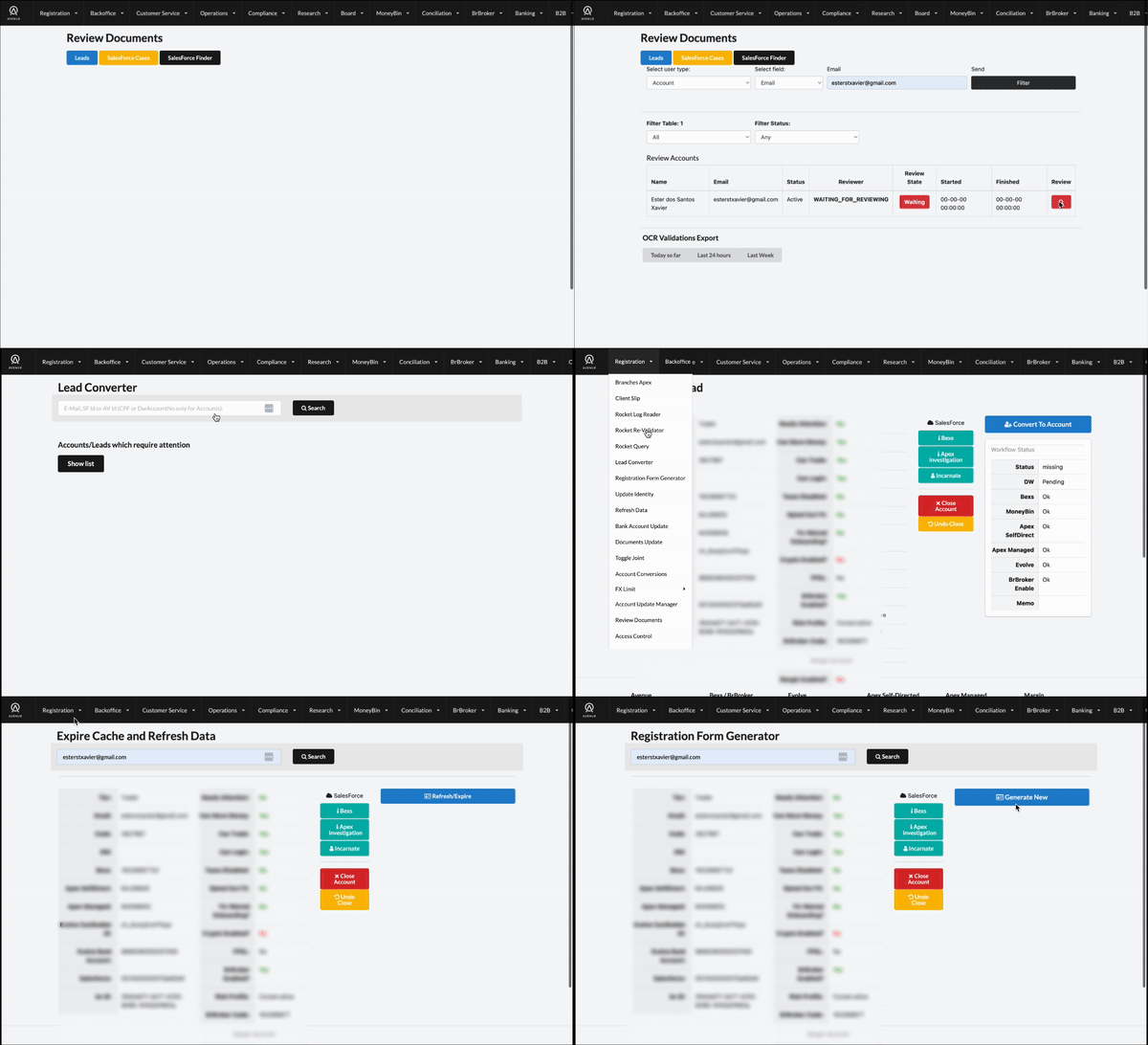
The minimum of steps required to validate a new account 🥲

Sync with engineering

With sufficient context at hand, it was time to discuss about value, possibilities, and viability. After some dynamic sessions with the engineering team, we gained a clear understanding of what was realistically achievable and the complexity of each solution. This marked the beginning of shaping a robust vision for the delivery, priorizing waves for the downstream process. 

Part of the proccess of effort valuation and refinement

Crafting

It was finally time to craft the solution. I redesigned the platform, ensuring that every existing function remained as simple as possible by condensing steps into a consistent information architecture. I also had to consider that this flow was inside of a platform that many other teams also use, so I couldn’t restructure the system globally.

With an internal client in place, validation and feedback collection were straightforward, so I was regularly testing the new design to ensure it made sense.

We also started structuring the OCR for reading and validating ID information on the already existing journey of limit increasing and cadastral changes.

New vision of the intranet tool

Downstream strategy

Rather than asking ‘how long will it take us to achieve this,’ our approach was to understand ‘what we can deliver each sprint.’ This shift in focus allowed us to avoid getting caught up in large, paralyzing epics and instead generate value with each delivery.

We organized the delivery into three main steps:

  1. Streamlining the flow by removing unnecessary steps.
  2. Refactoring existing components.
  3. Finally, structuring the new vision of the platform with all the enhancements.

Before and after – Information Architecture

Results

Since implementing the initial wave of delivery, we conducted a training session with the onboarding team to synchronize them with the changes in their workflow.

Three months post-implementation, here are the numbers:

+74%

Team capacity

Backoffice capacity increased
from 105 to 183 cases per day

-43%

Average service time

Time spent per analysis was
reduced from 4 to 2.3 minutes

-80%

Actionable screens

Reducing from 17 to 3 screens
necessary to perform every task

-60%

Human interaction

In activities of reviewing and analysing
documents by implementing OCR

Takeaways

Some lessons I’ve learned through this project:

  1. Observing can save valuable time that we might otherwise spend pondering frameworks and methodologies to understand user behavior. Just lend users an ear, listen to their needs, and they will provide powerful insights.

  2. Staying in tune with the engineering team helped to understand how we could generate impact right from the start of the project. This highlighted that engineers can influence not only through coding but also with their vision of the product and understanding of solutions.

  3. Design has the power to create a positive impact not just for end users, but also in shaping the services and routines of the company. As a result of this project, a dedicated squad was formed to proactively explore new opportunities.